Todas las entradas por Sergio Nasarre Aznar
Inquilinos contra propietarios

Libre Mercado, 25-10-2024. Texto completo disponible aquí.
La protección de la propiedad privada favorece la igualdad y promueve la libertad y la democracia

Economist & Jurist, núm. 283, octubre 2024. Disponible a texto completo aquí.
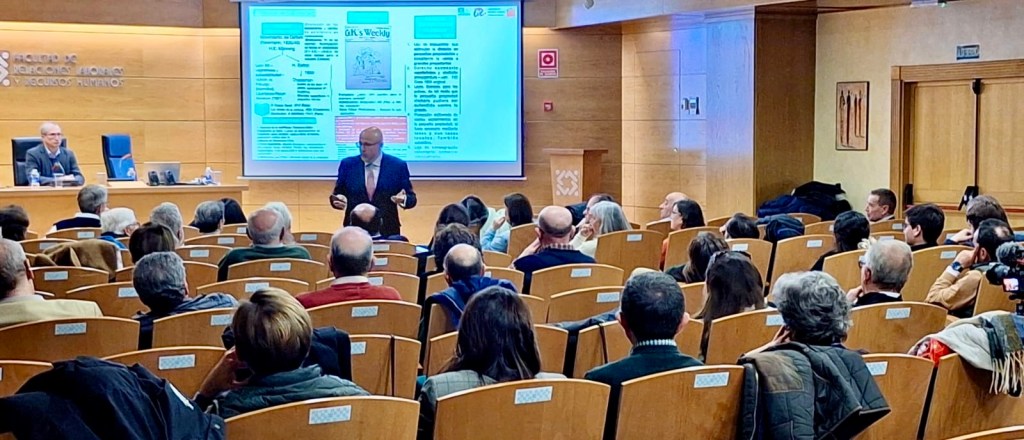
La propiedad imposible: el reto del acceso a la vivienda, Madrid, octubre 2024

Otro clavo en el ataúd de la propiedad privada: el Tribunal Supremo avala que tus vecinos decidan qué puedes hacer y qué no con tu piso.

Hay Derecho, 9-10-2024. Texto completo disponible aquí.
La creciente intervención del Estado en la vivienda: entre el laissez faire y la expropiación, Gerona, septiembre 2024.

La propiedad horizontal como forma de facilitar el acceso a la vivienda, Zaragoza, septiembre 2024.

Análisis de la Ley de vivienda, Córdoba, septiembre 2024.

Propiedad o esclavitud

Revista Suroeste, 11-9-2024. Texto completo aquí.
«La propiedad privada es la única institución […] que se alza como protección de los individuos y de las familias frente los abusos de los poderosos«.
Language and the use of law are predictive of judge gender and seniority

Font et al, Language and the use of law are predictive of judge gender and seniority, EPJ Data Science, 2024. https://doi.org/10.1140/epjds/s13688-024-00494-x
Disponible a texto completo aquí.
Abstract
There are examples of how unconscious bias can influence actions of people. In the judiciary, however, despite some examples there is no general theory on whether different demographic attributes such as gender, seniority or ethnicity affect case sentencing. We aim to gain insight into this issue by analyzing over 100k decisions of three different areas of law with the goal of understanding whether judge identity or judge attributes such as gender and seniority can be inferred from decision documents. We find that stylistic features of decisions are predictive of judge identities, their gender and their seniority, a finding that is aligned with results from analysis of written texts outside the judiciary. Surprisingly, we find that features based on legislation cited are also predictive of judge identities and attributes. While own content reuse by judges can explain our ability to predict judge identities, no specific reduced set of features can explain the differences we find in the legislation cited of decisions when we group judges by gender or seniority. Our findings open the door for further research on how these differences translate into how judges apply the law and, ultimately, to promote a more transparent and fair judiciary system.